Sunday, November 16, 2014

Posted by Talaial |

On November 14, the House successfully voted 251-161 to approve the Keystone XL pipeline, leaving the bill to be sent to the Senate that will vote on Tuesday. In the last six years, the Obama administration has repeatedly stalled any attempts to pass the bill through the State Department's approval process of the pipeline over environmental concerns and objections to claims about increased jobs and prosperity resulting from the pipeline.  According to Heavy.com, “ The proposed Phase IV, Keystone XL, would begin in Alberta and extend to Steele City, Neb., essentially replacing phase I of the existing pipeline with a more direct route and "carry more than 800,000 crude oil barrels a day to refineries along the Texas Gulf Coast." Ultimately, what is clear is that the Keystone XL Pipeline will increase jobs and prosperity for America and actually reduce any large environmental risks.

The proponents of the Keystone XL pipeline have maintained that its expansion will bring thousands of new jobs to the U.S. while President Obama has rebutted with "The most realistic estimates are this might create...2,000 jobs during the construction...which might take a year or two, and then after that...somewhere between 50 and 100 jobs.” However, in an massive environmental review of the project in January 2014, the State Department found that, "The Keystone XL project, if built, would support 42,000 jobs over its two-year construction period...[and] once built, the pipeline would support 50 jobs  and provide immediate non-governmental economic stimulus to local economies.

Environmental concerns that discuss how the Keystone XL pipeline will accelerate climate change have well intentions but are meaningless. According to the same State Department report, "blocking or approving…the Keystone XL pipeline would not have a "significant" impact on overall greenhouse-gas emissions and future tar-sands expansion...because...most of Alberta's oil will likely find a way to get to the market anyway — if not by pipeline, then by rail." In addition to this, if the pipeline is blocked and oil producers are forced to ship oil through rail or truck, "overall transportation emissions would increase by 28 to 42 percent." 


In consideration of all these factors, should the federal government reject a pipeline that would otherwise have its oils transported through dangerous alternatives and also lose the opportunity for the U.S. to achieve energy security? Clearly, America must move forward and I urge the Obama Administration and the Senate to approve the Keystone XL pipeline. 

Sunday, November 9, 2014

Posted by Jinx |
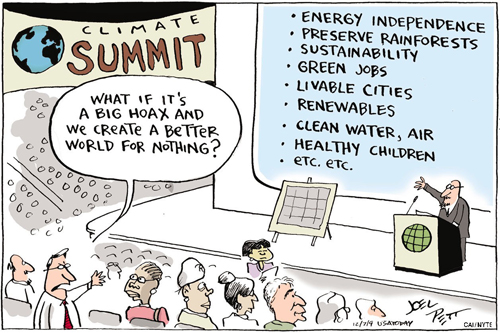
The U.S. Environmental Protection Agency itself acknowledges the continuous breakdown of our Earth’s natural environment and the dangers that it imposes. On the EPA’s website, a page dedicated solely to future climate change lists the key U.S. and global projections on issues such as temperature, precipitation, ice, and sea level changes. These include:
  • Southern U.S. states are expected to experience 2x more days with temperatures above 90°F in a high emissions situation.
  • As the ocean warms the intensity of hurricanes will increase.
  • Ocean acidification will severely harm marine species.
  • Snow cover in the Northern Hemisphere will decrease by 15% by 2100.
There is an overwhelming amount of scientific data from both NASA and NOAA as well that support these predictions. How close these predictions are and how strongly the climate is affected depends on the amount of greenhouse gases in our atmosphere. If this is so, why is it taking the U.S. so long to get on top of their game? A recent small study by Duke University points to “solution aversion”, a phenomena that occurs in many common political disputes.
Solution aversion, in simple terms, is ignoring the problem because the solution is undesired. For example, what is a popular solution to the climate issue? More government regulations. What do Republicans generally oppose? More government regulations. What do we do then? Ignore the problem cuz the solution suks!

In the study, Republicans and Democrats read a statement claiming "global temperatures will rise 3.2 degrees in the 21st century." When the proposed solution was some form of government regulation, only 22% of Republicans said that the temperature would really rise that much. When the solution was "the free market, such as with innovative green technology", 55% of them agreed with the statement. No notable change was recorded for the Democrats.

So what's the solution? The solution lies within us the people that will be affected by our government's inaction. We can either get our government to start banging out bills or leave them be until it's too late.  It's like watching a test date inevitably approaching, but doing nothing to prepare for it. We know the consequences, we can see it slowly happening in our life times right now, but still we do nothing and when the test date finally arrives, when it's finally too late to do anything, there is nothing we CAN do. And what are we left with? A big fat F across the whole Earth.


Posted by Talaial |
On November 3, 2014, 55% of Oregon voters approved the Oregon Legalized Marijuana Initiative, Measure 91 that would legalize recreational marijuana for adults ages 21 and older and allow these people to possess up to eight ounces of "dried" marijuana and up to four plants. In addition to this passage, Alaska and Washington D.C. have also passed similar measures nearly a year after Colorado and Washington's legalization of marijuana. Nevertheless, these recently passed legalization policies have designed a framework of burdensome taxation and regulation of marijuana that will not effectively eliminate or reduce the black market for marijuana and even other drugs. Perhaps, a more radical solution must be sought that can ultimately eliminate the illicit drug trade and allow the legal harvest and consumption of all illicit drugs; a free market for drugs.
 
First, let's face the cold hard facts:


These are just some of the few statistics illustrating the failure of the War on Drugs to decrease illicit drug consumption and violence rates. Evidently, it has dramatically resulted in the militarization of the police, and a cycle of poverty and violence in poor communities that lack important figures who are in jail because of drug offenses.


However, it must not be assumed that the government should have an interest in protecting what individuals consume.

As free individuals, we must decide what is best for our bodies; harmful or not harmful. If the government decides this decision for us, what prevents their regulation of anything that can truly cause us harm? In the words of Ludwig Von Mises, "why not prevent him from reading bad books and seeing bad plays, from looking at bad paintings and statues and from hearing bad music?"

Thursday, November 6, 2014

Posted by Talaial |
Hi fellow Americans, as political bloggers, we hope to foster new discussions on environmentalism as well as libertarianism through discussing our perspectives on current issues. For the uninitiated, environmentalism is a broad movement focusing on employing individual and governmental power to address the health of the environment and for environmental protection. On the other hand, libertarianism is a distinct philosophy dedicated towards advocating minimal state intervention in people's lives.

These two ideologies often conflict with each other as libertarianism is heavily focused on individual freedom while environmentalism seeks governmental and communal power to combat environmental issues. However, there are cases where the values of libertarianism such as private property rights in regards to natural resources can be extremely beneficial for environmentalism.

Nevertheless, we aim to explore these excellent topics throughout the entire year and definitely collaborate on issues that involve the two values.

Thus, let us continue on this journey and welcome to these new perspectives.

-Talaial and Jinxing

Sunday, November 2, 2014

Posted by Jinx |
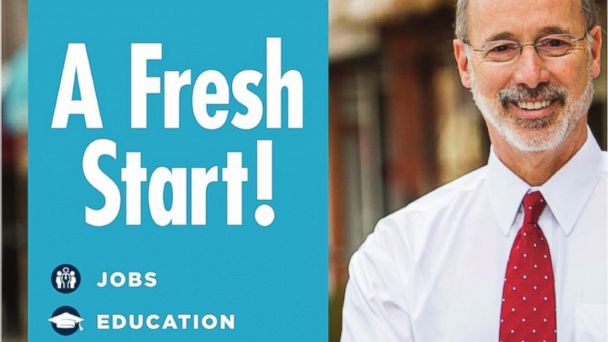
With Wolf up 15% in polls 2 days before game time, Corbett's run as governor is on the ropes. Pennsylvania has had enough of Corbett's ignorance of schools and support of big business. One major issue that is attracting many voters across the state is education. Wolf has advocated for strong education policies that will both fuel the economy and satisfy the many unhappy citizens of Pennsylvania. 50% of voters cite dissatisfaction with Corbett, something that many teachers of Philadelphia cite as well. Wolf proposes a 5% severance tax on gas and an income tax that will help offset the $1 Billion cut on education made by Corbett. With this funding the school district will be free to lower property taxes. With a strong educational system, Wolf believes that more jobs will be created and will stay in PA.

On other issues, Wolf opposes the privatization of liquor stores and supports the ban of the sale of assault weapons. He also advocates for legislation that would enable a broader use of marijuana for medicinal purposes. The problem though, will Wolf be able to implement all of his policies with a legislature controlled by the Republican party?


On the other side, Corbett blames the revenue to the education cuts as a result of an expiration of a federal stimulus. In reality though, Corbett allowed the funding of education to drop instead of using state revenues to maintain the Basic Education Funding formula. On the good side though, Corbett supports the privatization of the state liquor system, which could bring up to a billion dollars in revenue.

Whether Corbett wins reelection or Wolf carries the votes of the dissatisfied, there is no doubt that there will be major changes to the fiscal policies of PA. In one candidate the education of our state will be adequately funded, but at what cost? Money does not just magically appear because someone was voted in, it has to come from somewhere.(Let me give you a hint: YOU) But on the other hand do we want to entrust the next 4 years of our state to Corbett? Whatever happens, I feel like Pennsylvanians will be losing something and will have to live with their decision. 
Posted by Talaial |
Due to the political attack ads and misleading information from both sides of the political aisle characterizing the 2014 Pennsylvanian gubernatorial race, PA voters remain uncertain of who to vote for in the Tuesday election. However, one thing is clear; voting for Wolf will affirm his planned disastrous economic policies of instituting a progressive income tax that differs from PA’s 3.07% flat rate tax, a 5% severance tax on PA fracking, and disregarding the current $49 billion public pension crisis, which will ultimately reverse the economic growth made under Governor Corbett. Instead, PA voters should consider the record of Governor Corbett whose economic policies have decreased the PA unemployment rate from 8 percent when he took office to 5.7 percent in September and have resulted in 180,000 additional jobs to PA’s economy. After all, should voters vote for Wolf, a candidate with unspecific plans to increase the size of the PA government through massive taxation?

During Governor Corbett’s tenure, he balanced “four budgets without raising broad-based taxes” and passed a “$29 billion budget.” Under Wolf, what we will see are higher taxes accompanied with larger spending that will result in the same unsustainable fiscal crisis seen under previous Governor Rendell. Corbett has also upheld his promise of refusing to raise new taxes except lifting the cap on the gasoline tax and supporting the impact fee on gas wells to provide local revenue.

Furthermore, while claims from teacher unions, teachers, and students alike assert that Corbett has cut $1 billion in funding from PA schools, the evidence portrays the contrary. Under Governor Corbett, “state education funding has increased by about $1.5 billion since he took office,” and he signed “legislation earlier this year to create a Basic Education Funding Commission to recommend a fair school funding formula.” However, Corbett should have strived to ensure a fair funding formula for schools in PA earlier in his term and will surely proceed through this process as the second governor of PA.

Nevertheless, in consideration of all these successes under Governor Corbett, I urge PA voters to vote for Tom Corbett as the next Governor of Pennsylvania. However, if you still have doubts, please research each candidate thoroughly to make an educated vote. Nonetheless, Wolf’s policies will decrease long term growth in PA and ensure that future Pennsylvanians will have to deal with the terrifying public pension crisis.